

Wildfire!
Wildfires in the Cariboo and Okanagan—places I know and love, where family and friends are living with the threat of fire—have unsettled me, bringing me back to a fire site I encountered years ago.

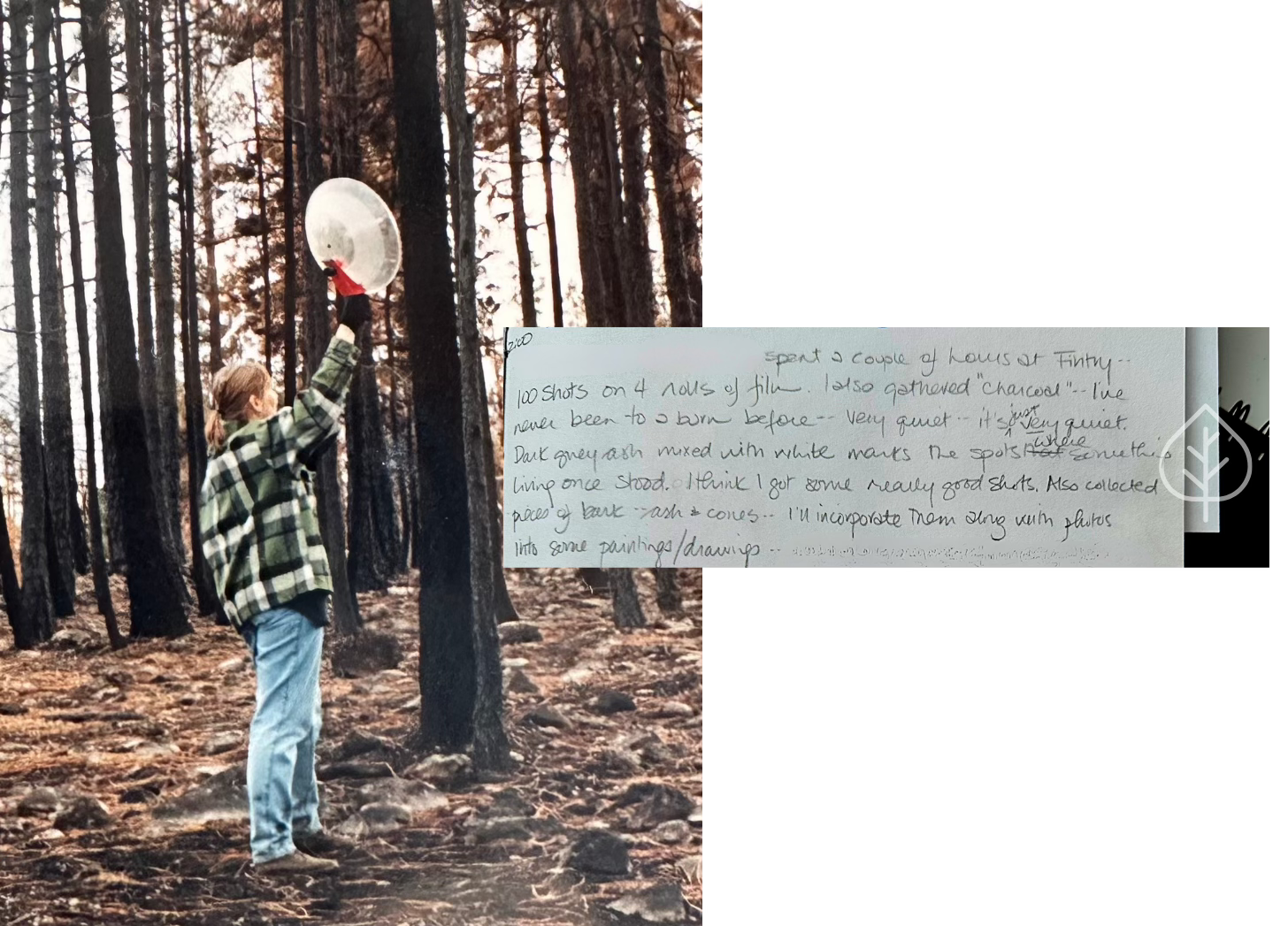
The silence is charcoal, acrid smoke. No insects, no movement of leaves or grass, no calls of birds. Just a soft sound like breathing—the breeze moving amongst shadow trunks. I stand in what is left of a clearing, armed with a parabolic field microphone, hoping to capture whispers of memories.
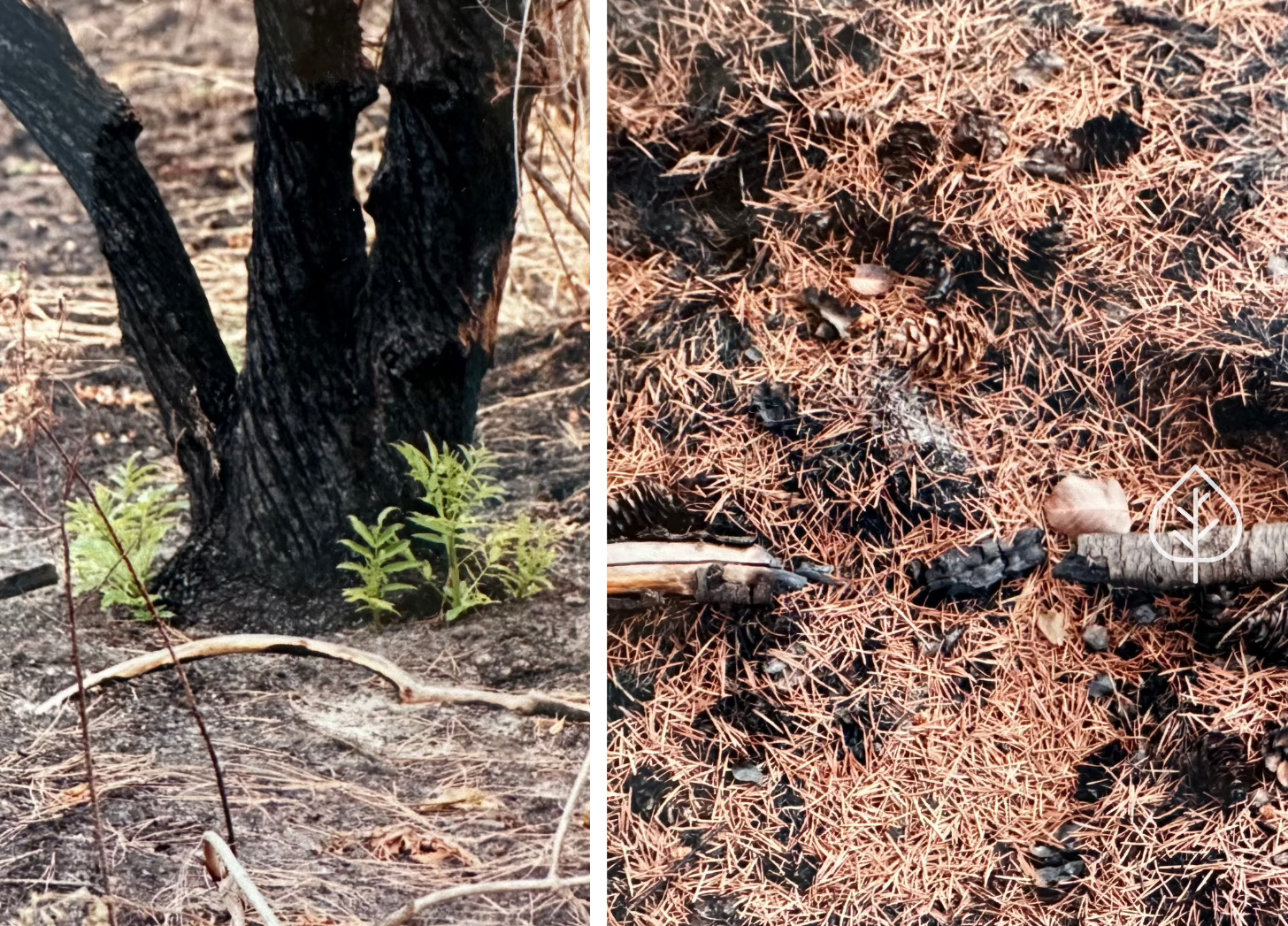
The ground is spongy, soft underfoot, like stepping onto a soft mattress. The silence unsettling. I stand in the midst of this silence filled with profound sadness and awe at the force that can split living trees into splinters, burning roots deep underground for days. Hope and awe at the new life that has already begun to emerge. Seeds that can only begin to grow when released by fire.
This was the Fintry fire site in 1998, a place that deeply affected me. I wanted to share the feeling of being at the site. This became the Wildfire installation at the Alternator Gallery in Kelowna.
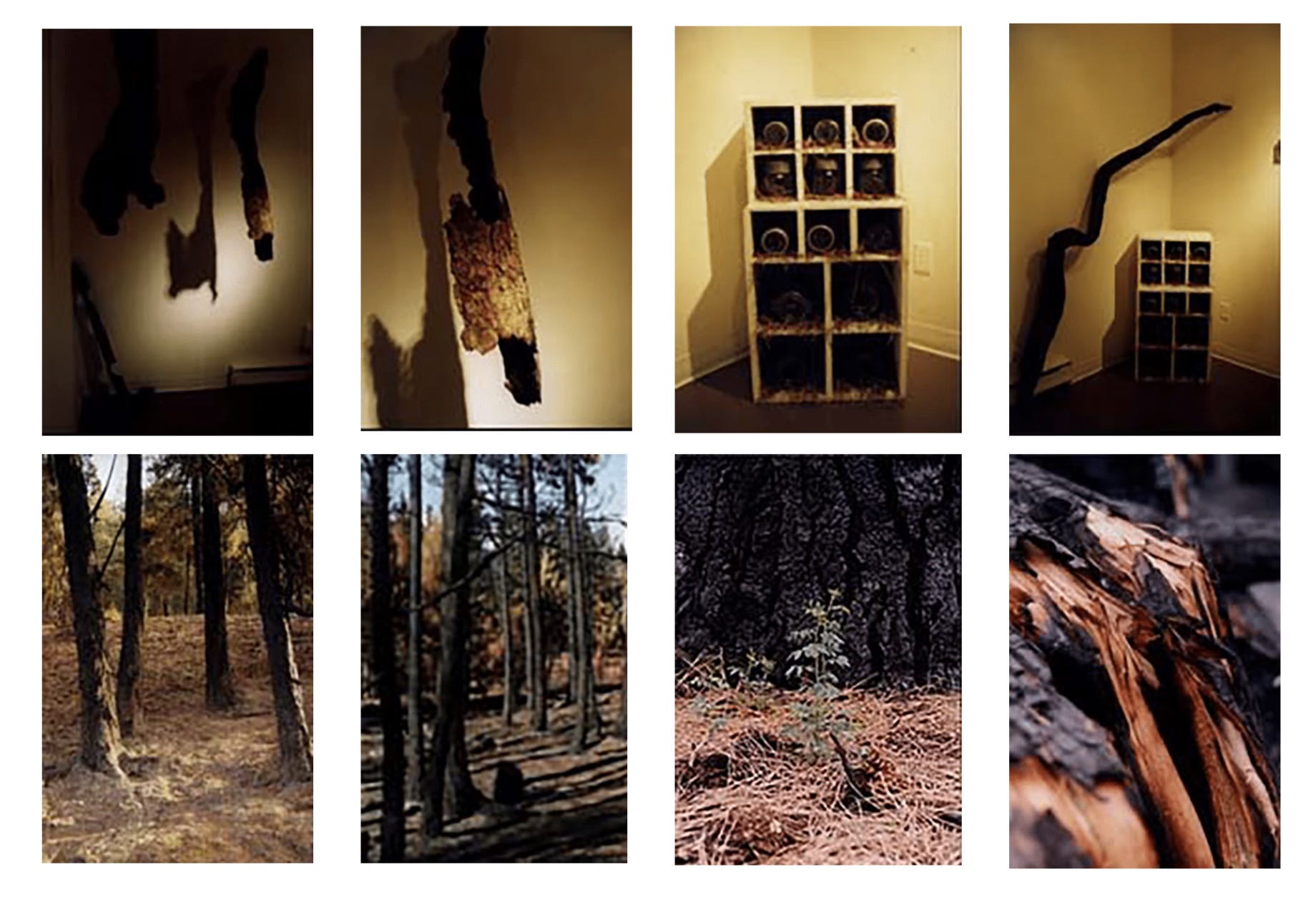
From the fire site I gathered remnants of trees, tying splinters of limbs and large sections of hollowed-out bark, onto the top of my car. The car trunk was filled with ash, charcoal, soil and blackened leaves in antique glass canning jars—later viewers were invited to open them. I drove away with the remnants strapped to the roof of my Honda Accord, wondering what people thought as I passed them on the highway.
In the gallery, ten-foot blackened charcoal limbs rested against a wall, pieces of blackened bark suspended from the ceiling; a giant stump stood in the corner like a claw. The audio recording from the site was combined with the soft sound of breathing—the memory of the site—and activated when a viewer entered the room. The scent of wildfire permeated the gallery beyond the installation space.
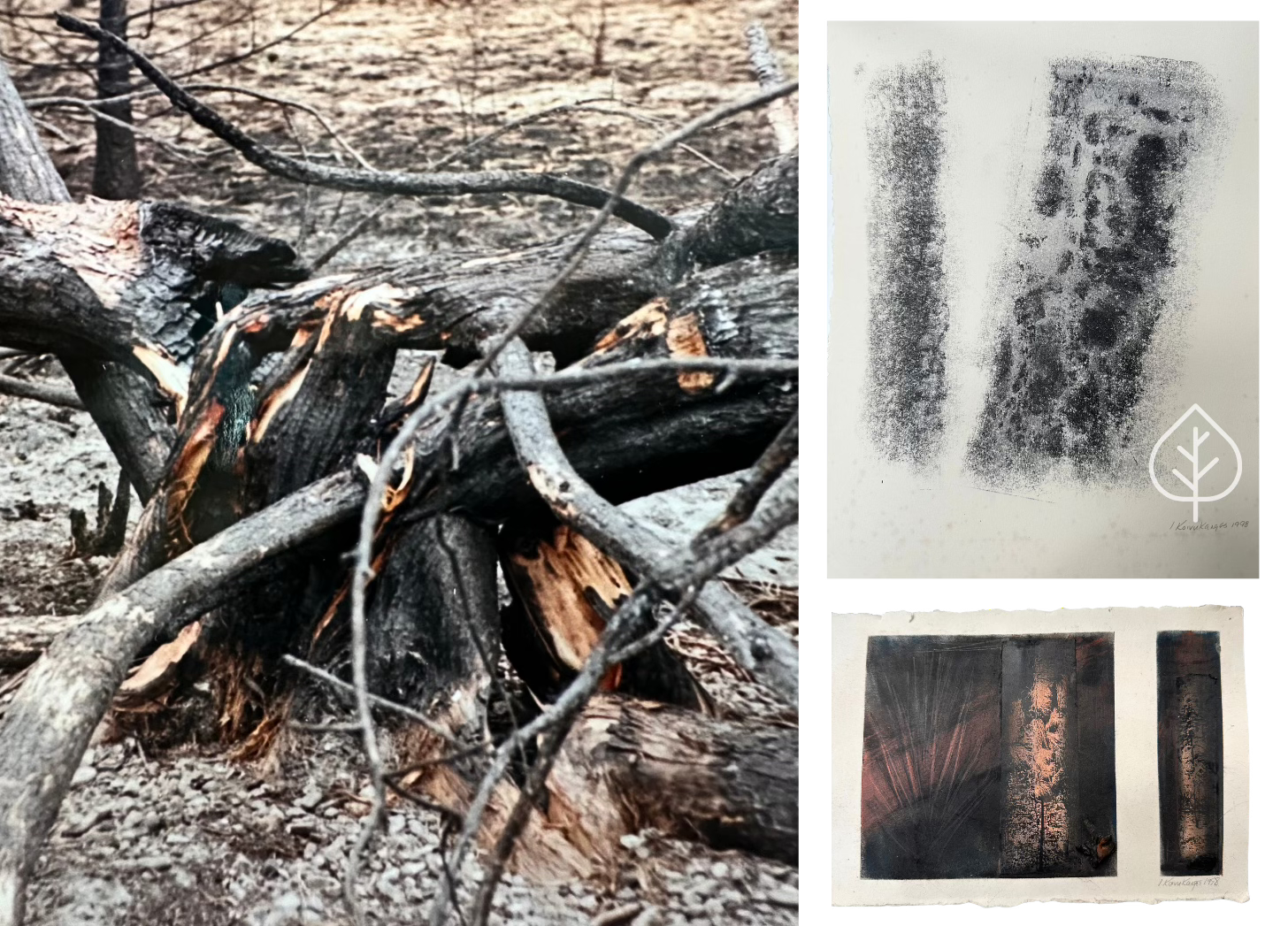
I also took rubbings from the burned trees, which later became a series of prints called Ghost Markings, while charcoal gathered from the site found its way into a series of mixed-media drawings. Both were exhibited in a later show.
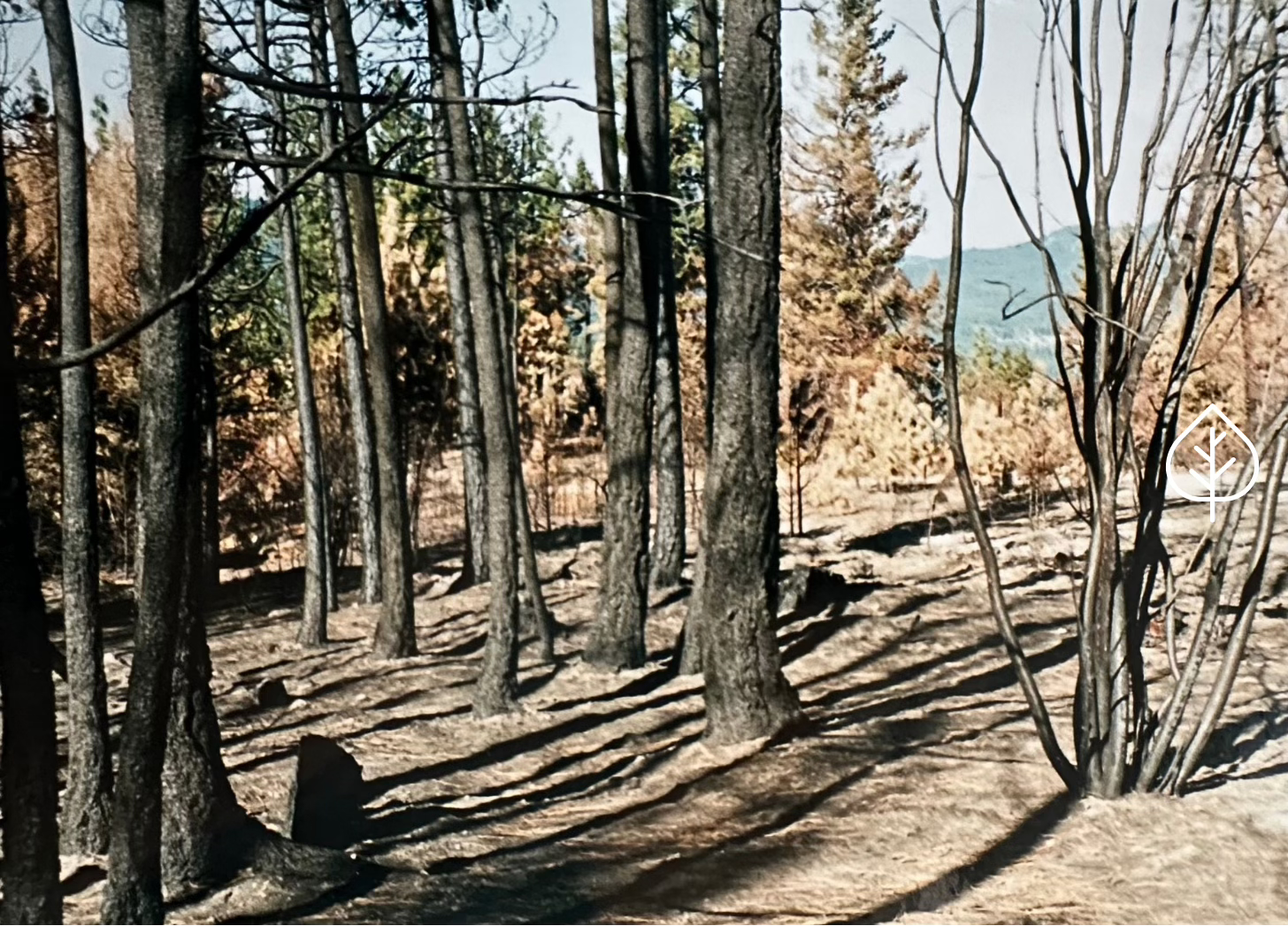
This summer it feels as if the heart of British Columbia and south to Washington and Oregon is on fire. My brother and his family now live across Okanagan Lake from the Fintry fire site. In some of my photos from 1998 I think I can catch a glimpse of his neighbourhood through the blackened branches of Ponderosa pine. My relatives have been sitting with unease, hoping that embers aren’t carried on the winds to their shores—it’s happened before, fire crossing water. A few days ago, a friend of mine lost everything in the Bald Ridge fire, escaping with her family and three shopping bags of belongings.
Standing there in 1998, I understood what fire had done to the site. I understood much less about what we had been doing to the forest.
Growing up in this province, I don’t remember summers filled with smoke and wildfires. I do remember controlled burns and the warnings that came with them. I don’t think most of us at that time truly understood that our forests were being profoundly changed through logging and forest-management practices aimed at creating commercially valuable conifer forests over naturally mixed forests, and that glyphosate was the main herbicide being used.
Glyphosate was registered for use in Canada in 1976 and began to be used in British Columbia forestry—and across Canada—in the late 1970s, with spraying expanding substantially during the 1980s. Following logging, glyphosate and other vegetation-control methods were used to suppress aspen, cottonwood, willow, berries, wildflowers and other species in favour of conifer stands. More than one million acres of B.C. forest were treated with herbicides, while vegetation was manually removed from roughly another 1.2 million acres.
I knew none of this when I walked into the Fintry site with my microphone and camera.
Forests lost diversity. Deciduous trees and shrubs provide wildlife habitat, return nutrients to the soil, support complex soil communities and can help slow the spread of fire. Aspen is particularly important because its moist foliage and relatively low flammability can interrupt fire movement across a landscape.
Nearly three decades after Wildfire, I find the site is still whispering to me.
Have you experienced a wildfire site—or a fire? What most resonated for you from that experience?
I share stories from more than three decades of work as an environmental artist, alongside the places, questions, encounters and ideas shaping my work now. Some stories return to earlier projects; others begin in the present. You can see more of my work at ingridkoivukangas.com and subscribe if you’d like to follow along.